
Why the EU needs to renovate its buildings by 2050, what stands in the way, and what everyone gains: the Renovate Europe infographic, from the problem today to the benefits for all.
The infographic in text
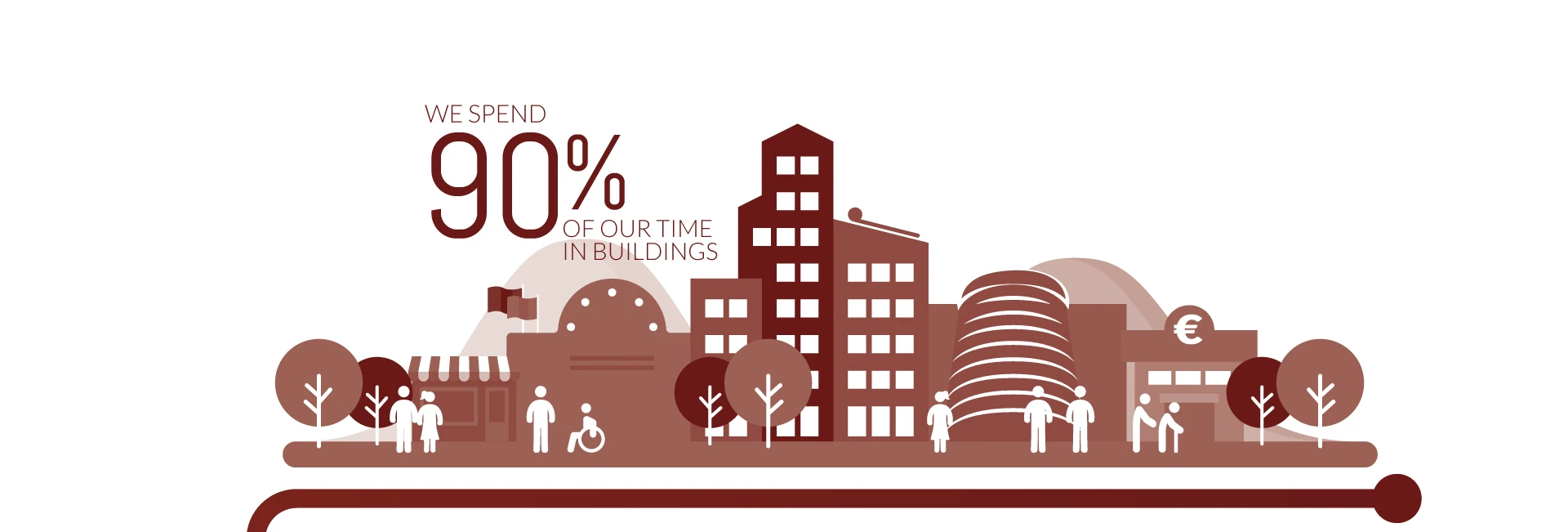
We spend 90% of our time in buildings.
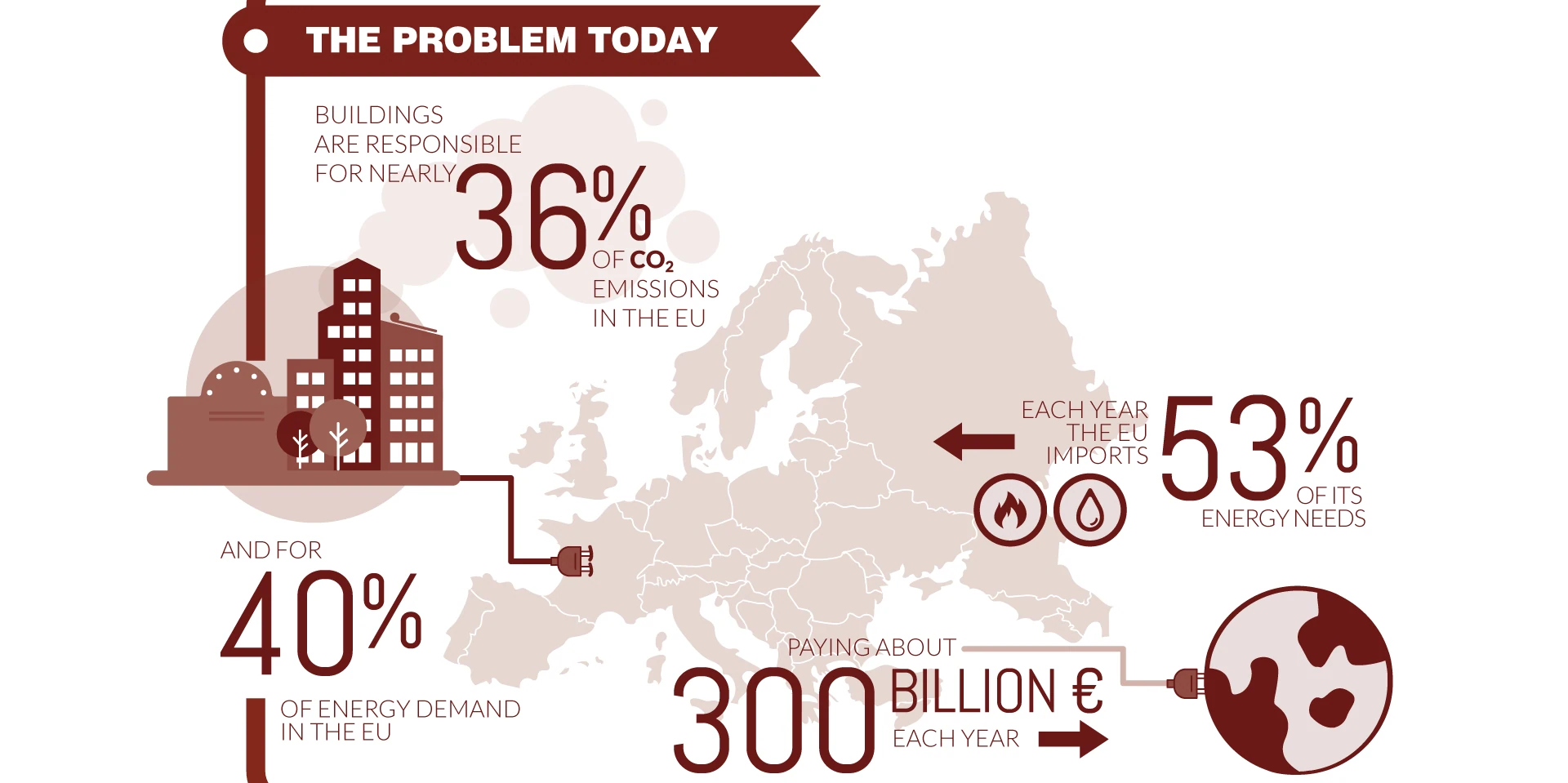
The problem today
- Buildings are responsible for nearly 36% of CO₂ emissions and 40% of energy demand in the EU.
- Each year the EU imports 53% of its energy needs, paying about €300 billion.
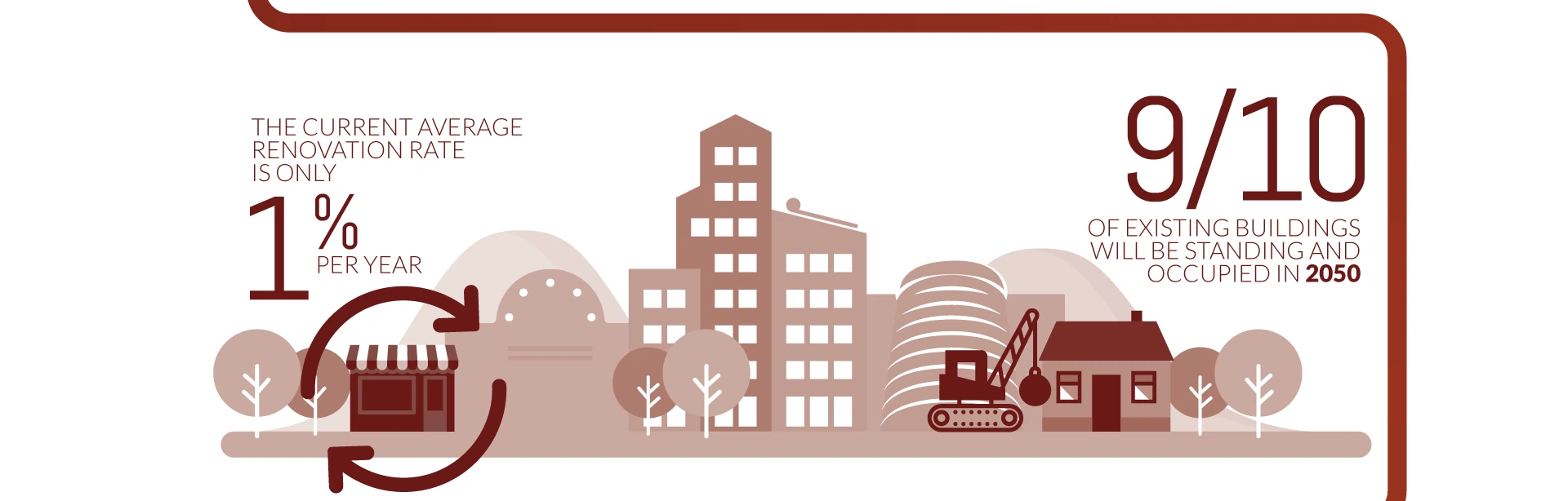
- The current average renovation rate is only 1% a year.
- 9 in 10 of today’s buildings will still be standing and occupied in 2050.
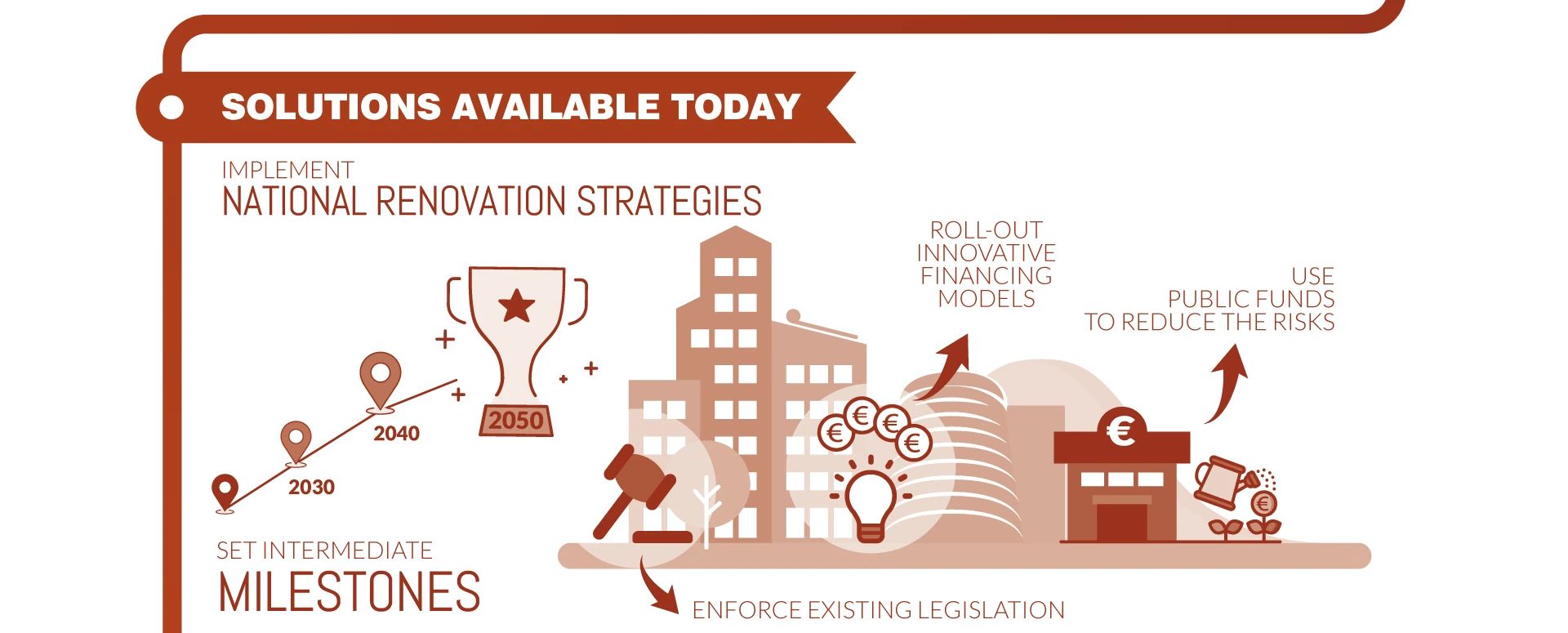
Solutions available today
- Implement national renovation strategies, with intermediate milestones for 2030 and 2040 on the way to 2050.
- Enforce existing legislation.
- Roll out innovative financing models.
- Use public funds to reduce the risks.
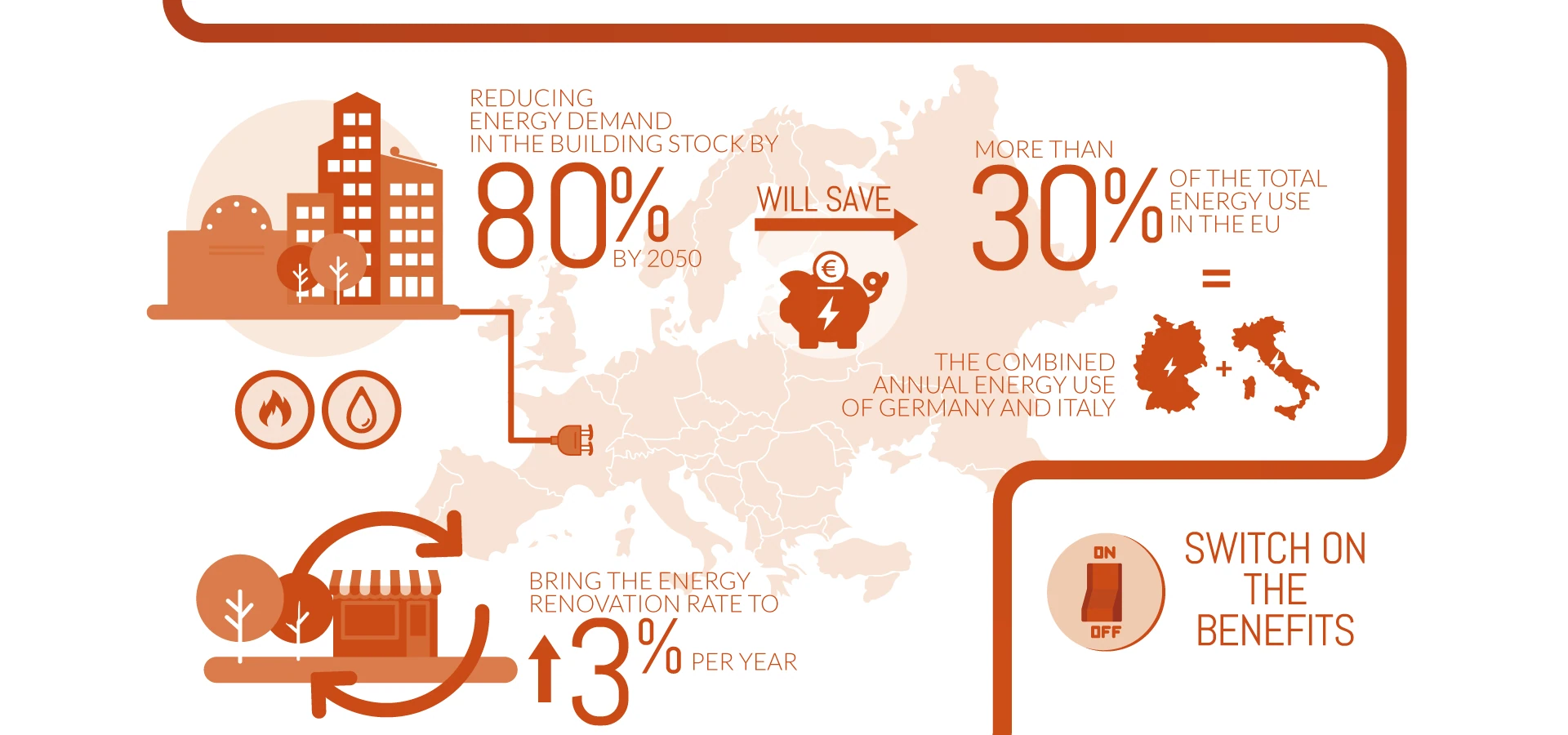
- Bring the energy renovation rate up to 3% a year.
- Reducing the energy demand of the building stock by 80% by 2050 would save more than 30% of the EU’s total energy use: the combined annual energy use of Germany and Italy.
Benefits for all
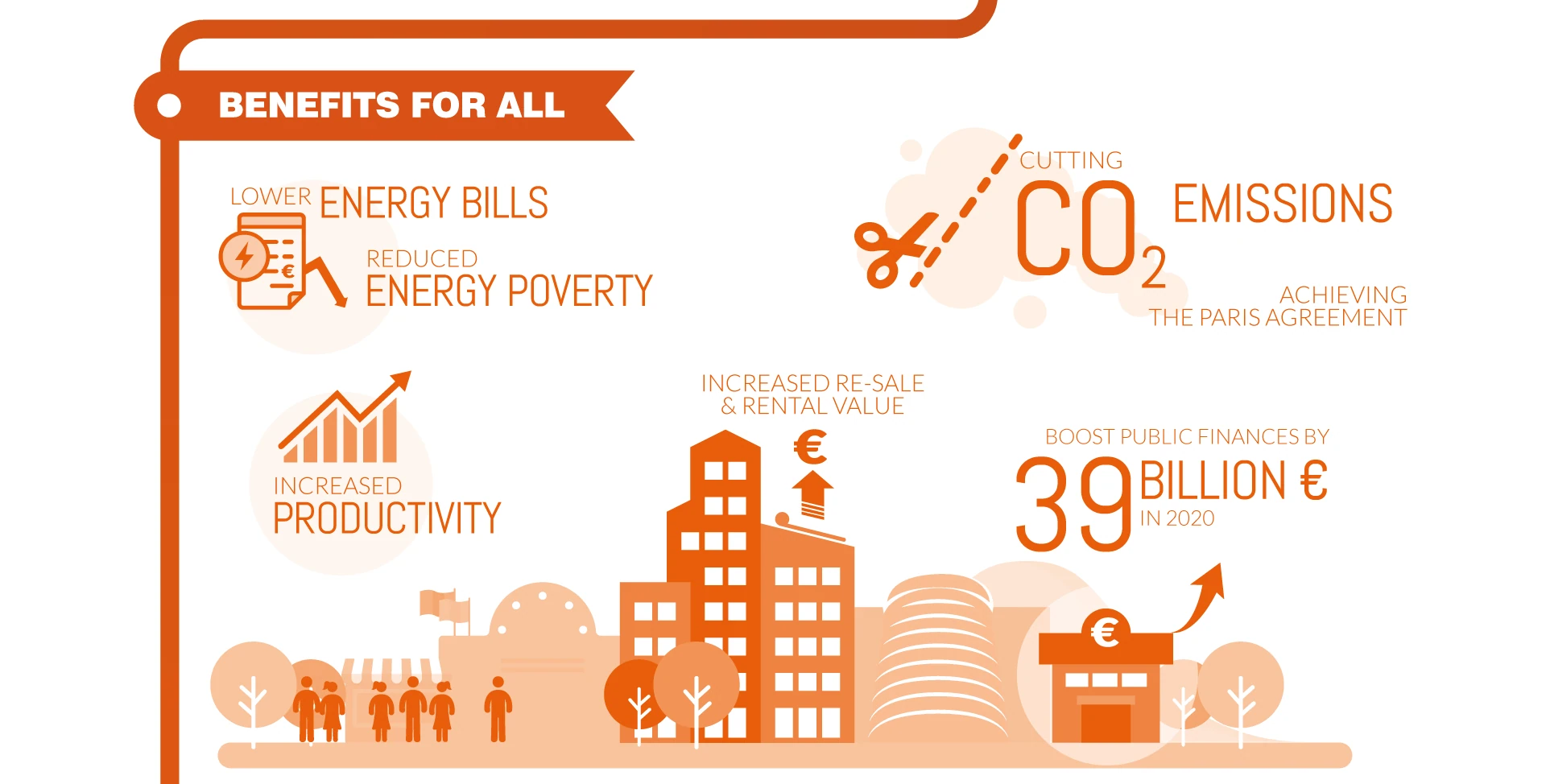
- Lower energy bills and less energy poverty.
- Lower CO₂ emissions, and the Paris Agreement within reach.
- Higher productivity, and higher resale and rental values.
- Public finances boosted by €39 billion in 2020.
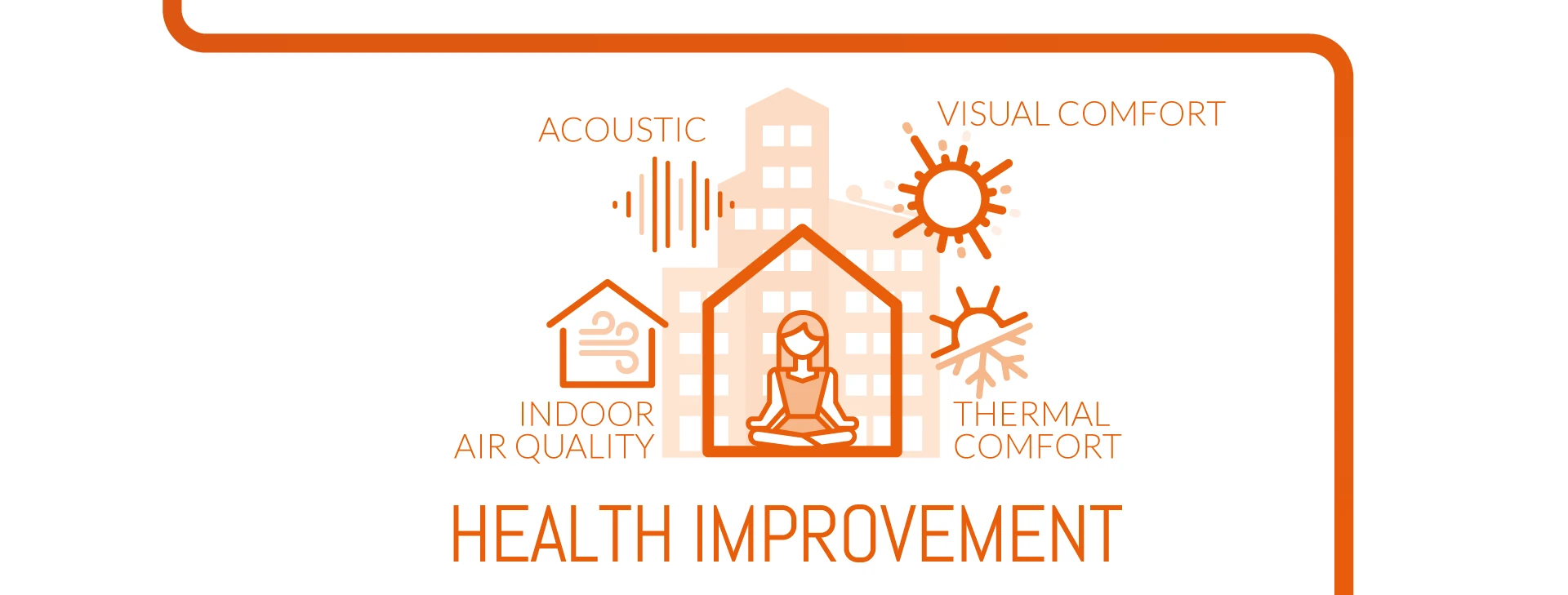
- Better health: indoor air quality, thermal, visual and acoustic comfort.
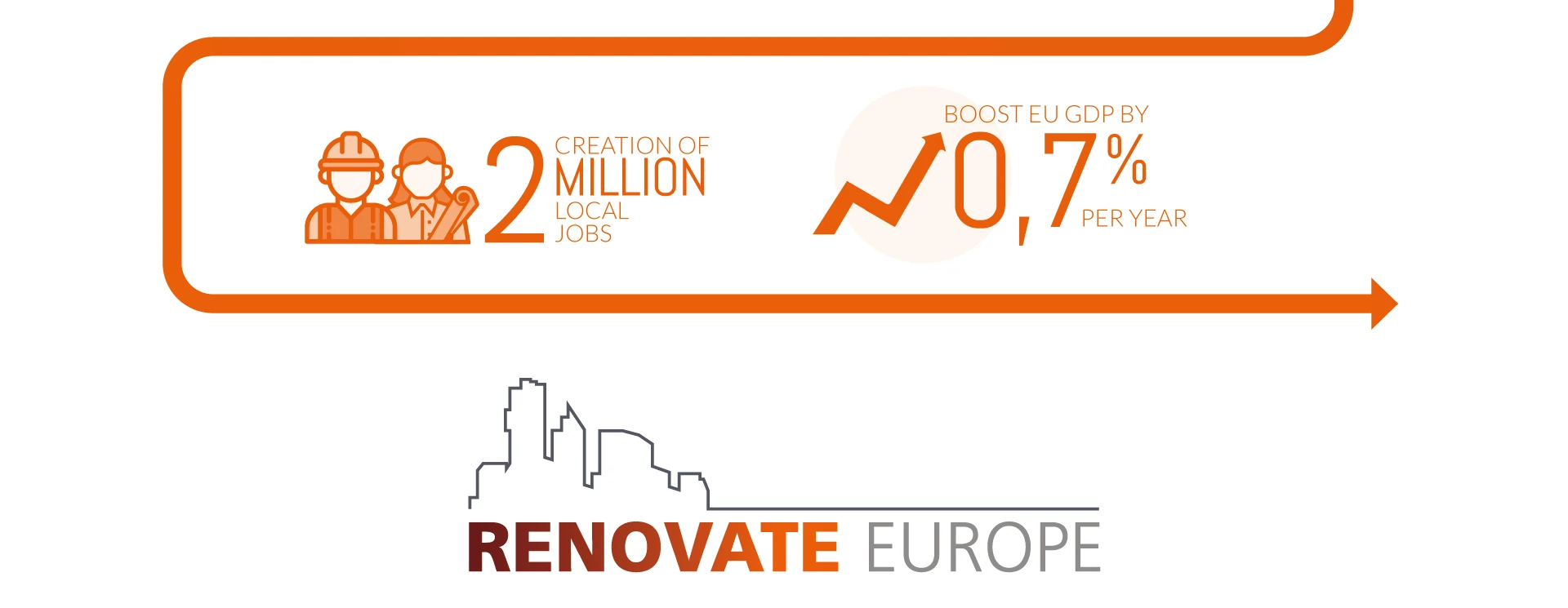
- Two million local jobs, and EU GDP up 0.7% a year.