The EU is facing its second major energy price crisis in four years, and progress has been too slow since the first crisis that was triggered by Russia’s invasion of Ukraine. The latest crisis, sparked by the US and Israeli conflict with Iran, is again pushing up fossil fuel prices, exposing the same strategic weakness: the EU still depends too much on imported energy it cannot control.
Commissioner Dan Jørgensen’s recent warning that the current crisis could affect prices for months, even years, should be, in all logic, the final wake-up call prior to real action on reducing our energy demand in the EU. The numbers are sobering, with the European Commission estimating that higher fossil fuel prices have already added around €24 billion to Europe’s energy import bill this year. That’s €24 billion that could have been invested in our under-performing buildings, creating much needed jobs, and delivering resilience and greater competitiveness to the EU economy.
Energy security is not only about finding new suppliers, but also about reducing our demand for fossil fuels!
The good news is that the EU has already built much of the needed legislative framework in an ambitious and coherent way. We now have the revised Energy Performance of Buildings Directive, the Energy Efficiency Directive, the Renewable Energy Directive, and the EU ETS for buildings and road transport, all pointing towards lower demand, cleaner heat, and better protection for citizens.
The real challenge we now face is ensuring that the member states of the EU urgently implement these complementary legislative acts and generate real savings and more renewable energy.
A recent Guidehouse Study should provide adequate incentive as it shows that fast-tracking energy efficiency, building renovation, and climate policies could reduce EU annual gas demand by nearly half by 2040 — from 304 to 160 billion cubic metres. At pre-war prices, that means around €350 billion in avoided energy costs per year. At today’s levels, that is more than €500 billion, above the estimate of the European Commission for the annual amount required to achieve the energy transition.
Every energy renovated apartment buildings lower exposure to price shocks. Every renovated school, hospital, office replaces fossil fuel volatility with EU resilience.
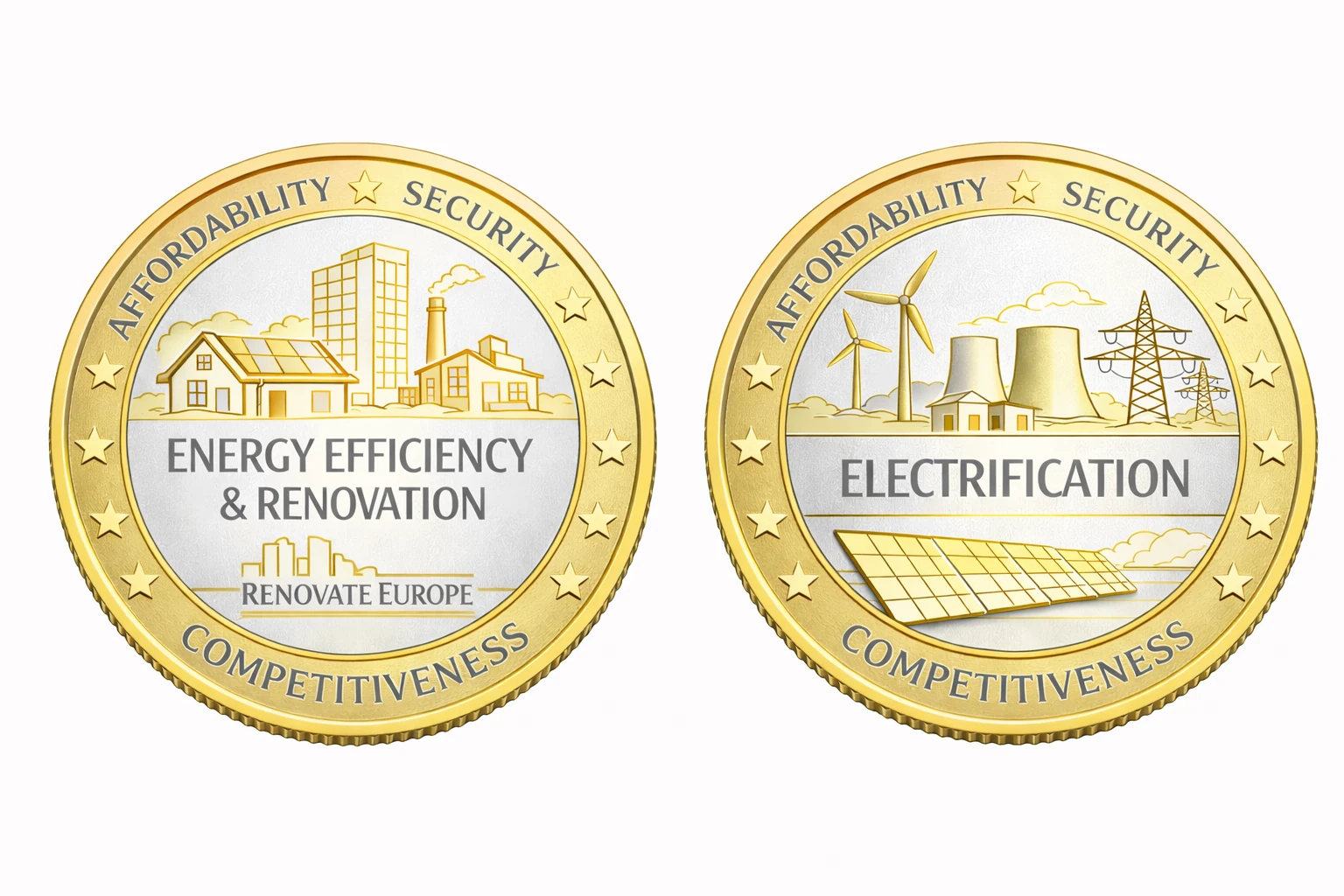
At the Renovate Europe Campaign we see energy efficiency and electrification as two sides of the same coin as renovated buildings need less energy, smaller heating systems, and they put less pressure on electricity grids. In short, highly performing buildings significantly contribute to reducing the cost of electrification and the needed upgrading of our electricity grids. We must keep in mind that every inefficient building is a missed opportunity, and every high-performance building is a security asset.
Moving forward towards implementation, the EU and its member states must make energy demand reduction a core security metric. We can see, for example, that gas storage and diversified supplies matter, but permanently lower gas demand matters more.
It has been realised that the households most exposed to energy price shocks are often those living in the worst-performing buildings. At the Renovate Europe Campaign we support the approach in the Buildings Directive that requires these worst-performing buildings to be prioritised by the member states. To do so each country must arm itself with a strong renovation plan, predictable funding, one-stop shops, skilled installers, and full use of the Social Climate Fund for structural measures, avoiding paying out one-off subsidies in times of crisis.
The current practice of facing a price-hike crisis by paying twice for our fossil fuels (once when we import them and again when we subsidise them) must end. We cannot subsidise our way to energy security, but we can renovate our way there!
The EU and its member states have the legislation, they have the technologies, they have the evidence, and they have the experience from 2022. Now it time to demonstrate that we have all learnt from energy crises and to deliver energy renovation at scale!
To accompany this op-ed, the Renovate Europe Campaign is releasing a special coaster designed in the shape of a coin, a simple but powerful symbol of Europe’s energy transition. Electrification and energy efficiency are interconnected and mutually reinforcing. Efficient buildings reduce the energy we need, while electrification ensures the energy we use is cleaner, more secure and increasingly homegrown. Energy Efficiency and Electrification are two sides of the same coin: a resilient, affordable and secure European energy future.