
Educational Buildings Campaign
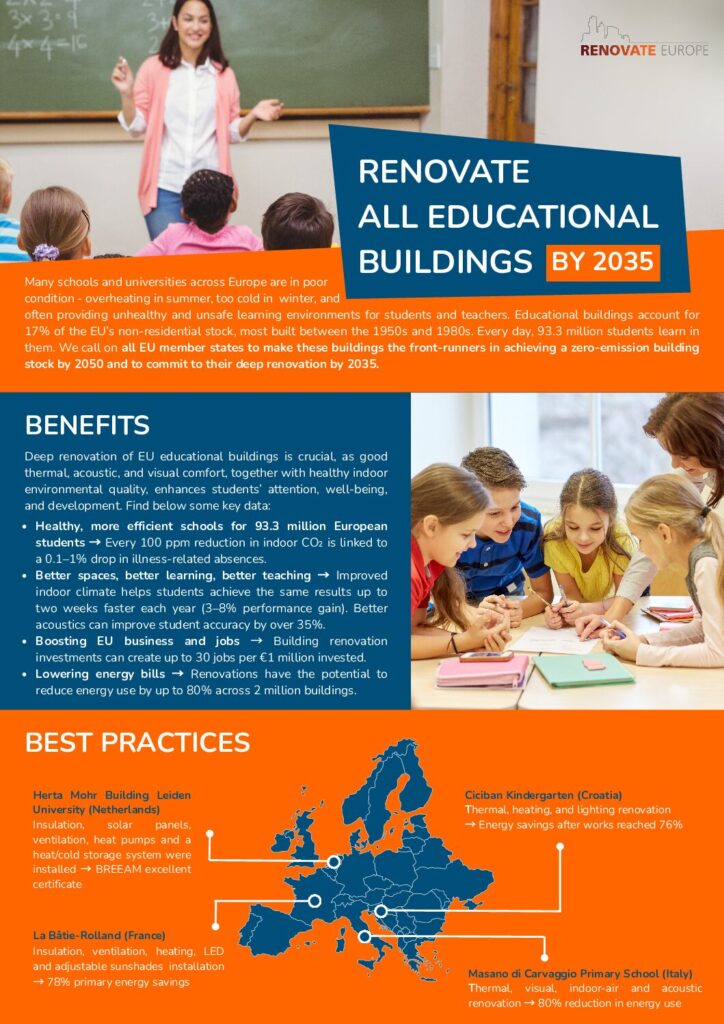
Many schools and universities across Europe are in poor condition: overheating in summer, too cold in winter, and often providing unhealthy and unsafe learning environments for students and teachers. Educational buildings account for 17% of the EU’s non-residential stock, most of it built between the 1950s and 1980s. Every day, 93.3 million students learn in them. We call on all EU Member States to make these buildings the front-runners in achieving a zero-emission building stock by 2050 and to commit to their deep renovation by 2035.
Latest campaign activity
On 23 June 2026, Renovate Europe organised a roundtable discussion at the European Parliament in Brussels, hosted by MEP Marcos Ros Sempere. A selected group of teachers and student representatives joined policymakers and key stakeholders to discuss the state of Europe’s educational buildings and the priorities for their renovation, and to share concrete case studies and best practices.
Discover more about the event on the dedicated page.
Benefits of the Educational Buildings Campaign
Deep renovation of EU educational buildings is crucial, as good thermal, acoustic and visual comfort, together with healthy indoor environmental quality, enhances students’ attention, well-being and development. Find below some key data:
Healthy, more efficient schools for 93.3 million European students
Every 100 ppm reduction in indoor CO₂ is linked to a 0.1–1% drop in illness-related absences.
Better spaces, better learning, better teaching
Improved indoor climate helps students achieve the same results up to two weeks faster each year (3–8% performance gain). Better acoustics can improve student accuracy by over 35%.
Boosting EU business and jobs
Building renovation investments can create up to 30 jobs per €1 million invested.
Lowering energy bills
Renovations can reduce energy use by up to 80% across 2 million buildings.
Our asks
Member States are already required under the Energy Efficiency Directive (EED) and the Minimum Energy Performance Standards of the Energy Performance of Buildings Directive (EPBD) to renovate public and non-residential buildings. Educational buildings, such as schools and universities, offer a key opportunity to lead by example in energy renovation.
The Renovate Europe Campaign calls on EU Member States to commit to the deep energy renovation of all educational buildings by 2035 by:
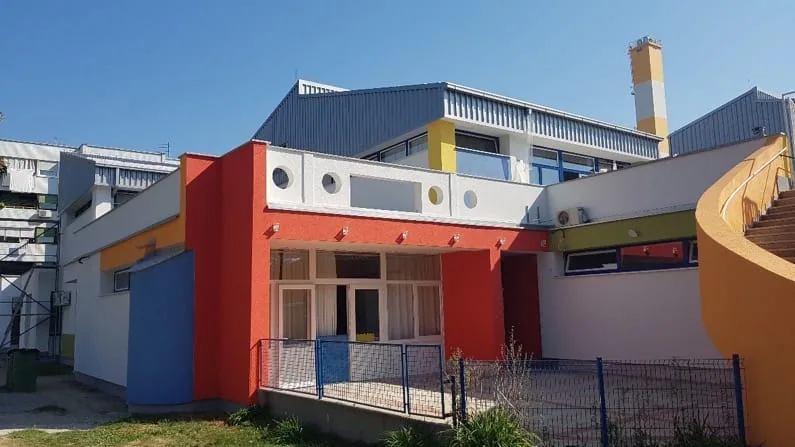
Dedicated renovation plans
Including a chapter in their National Building Renovation Plans that is fully dedicated to educational buildings, both public and private.
Zero-emission standards by 2035
Committing to bringing all existing educational buildings, through deep renovation, to the highest energy rating in their country (the zero-emission standard as defined in the EPBD) by 2035 at the latest.
Innovative technical approaches
Encouraging innovative technical approaches that take account of the special nature of educational buildings, allowing them to be renovated during holiday periods so as not to disrupt educational outcomes for pupils and students alike.
Feasible financing
Designing financing programmes that make the vision of a zero-emission educational building stock feasible within the timeframe to 2035.
Shared experience
Sharing experiences with other Member States to boost collective technical knowledge, innovative approaches and impactful actions.
Political support
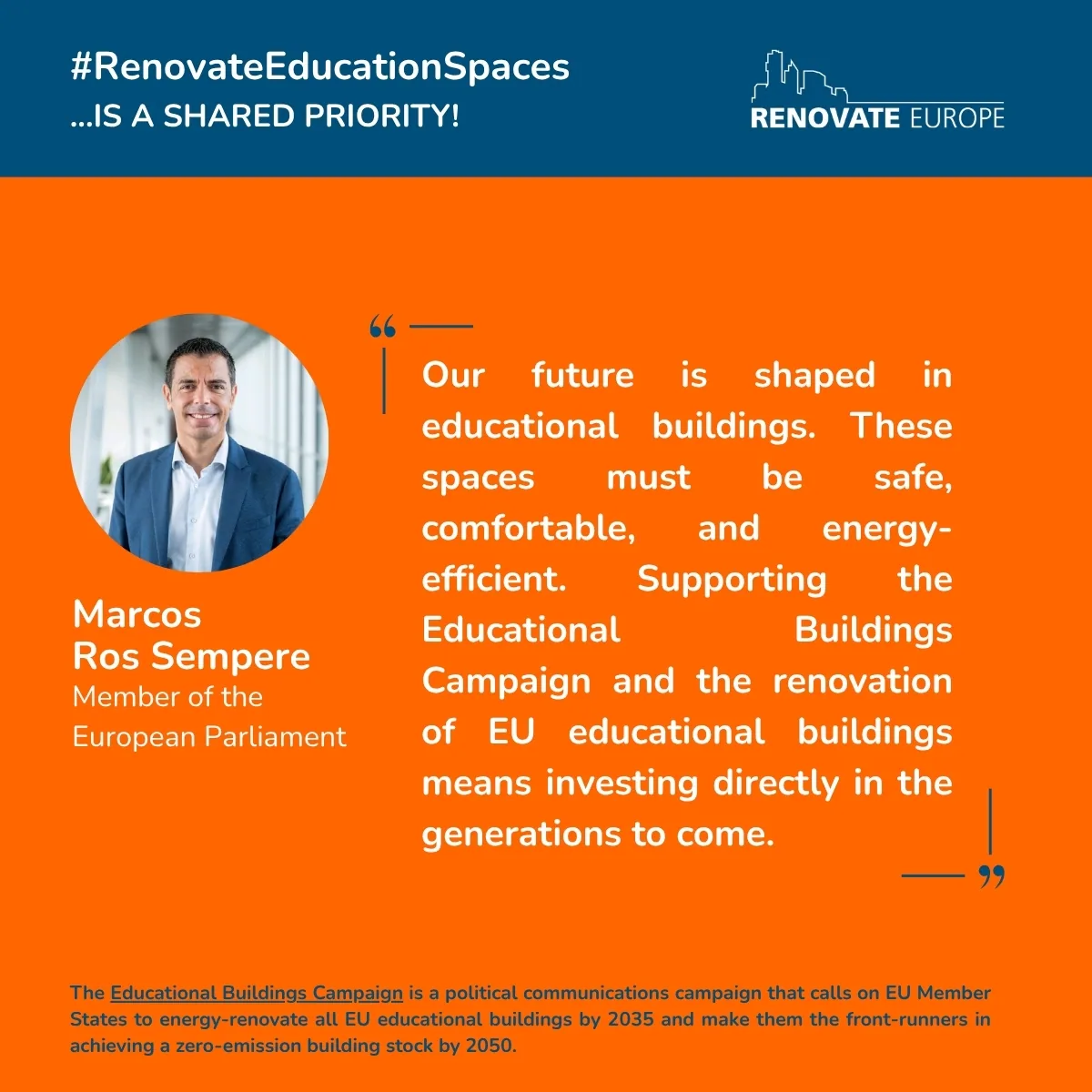
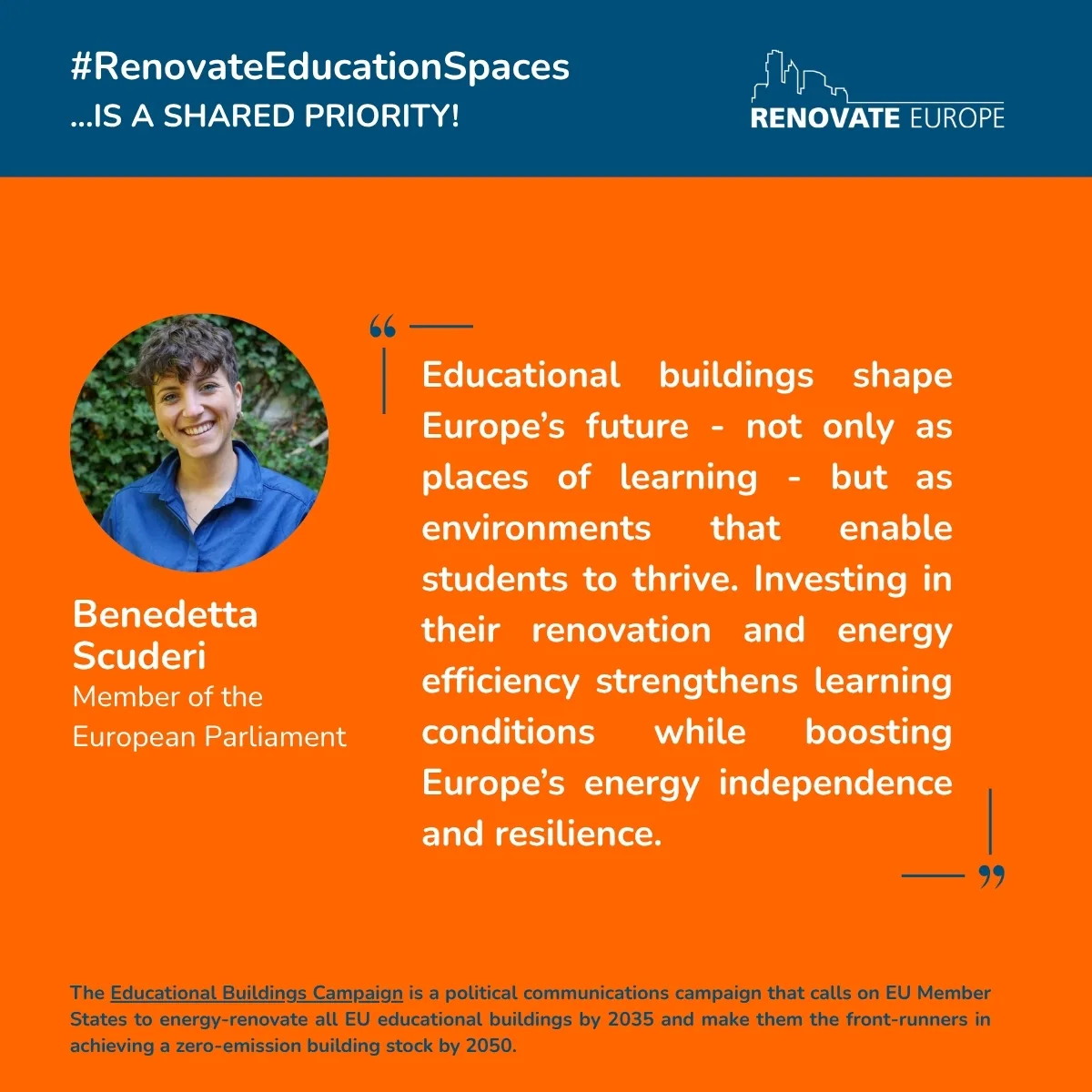
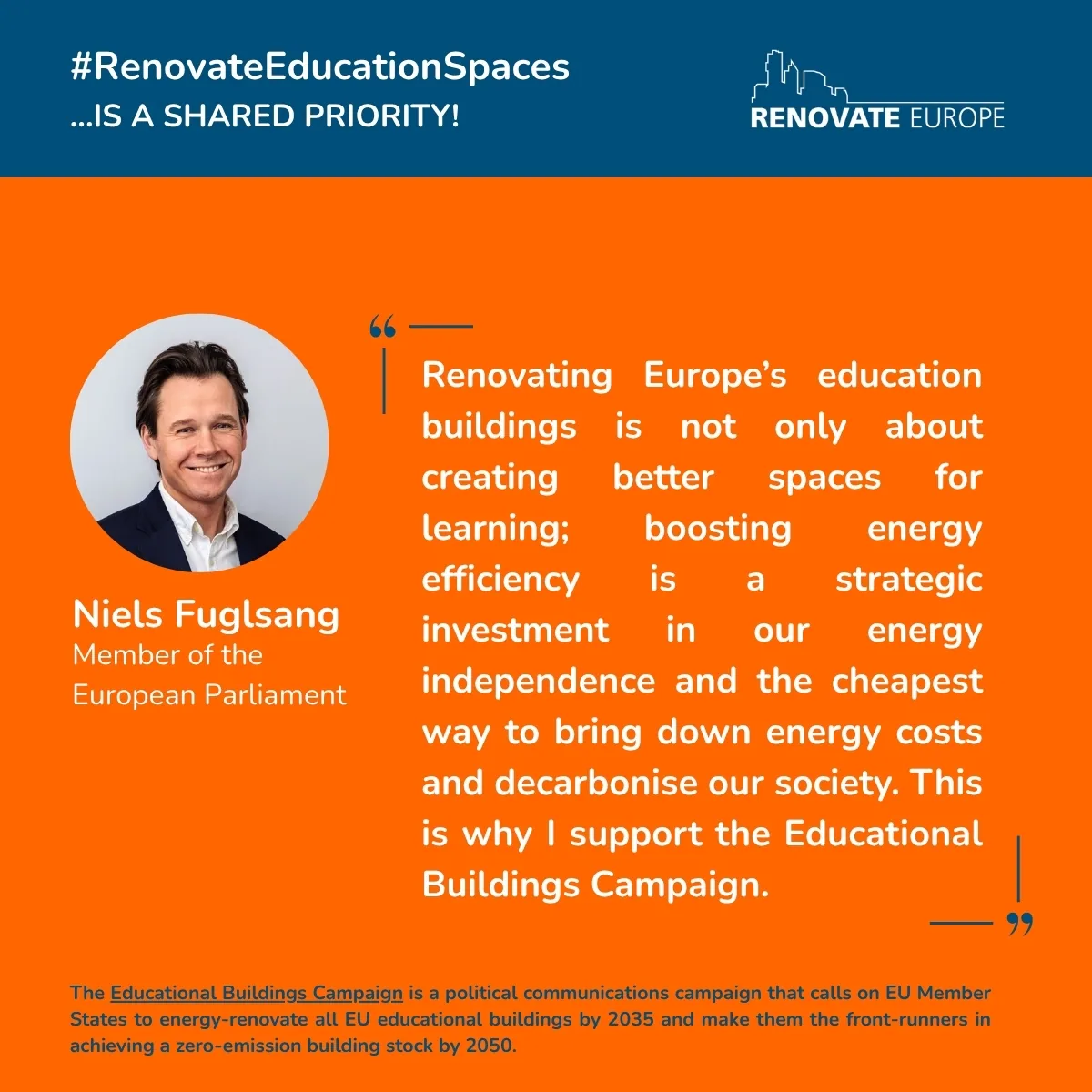
Members of the European Parliament from across political groups have voiced their support for the Educational Buildings Campaign, recognising the urgent need to provide students and educators with healthy, comfortable and energy-efficient learning environments:
In the media
Our Campaign Director, Adrian Joyce, recently spoke with Foresight Climate & Energy about the campaign. Read the interview.